What Is an MPC Wallet? Self-Custody and Security
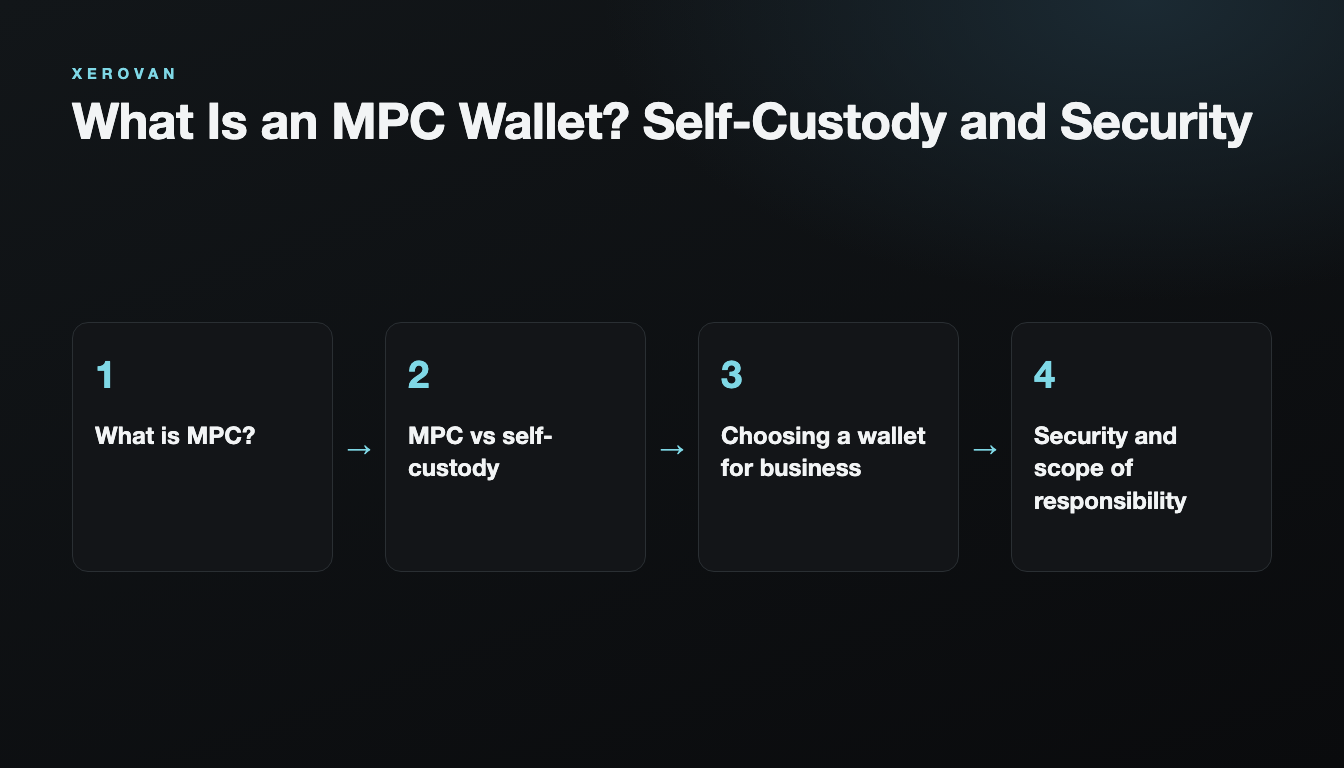
An MPC wallet protects assets by not putting all authority in a single private key. Knowing how it works and what to look for makes wallets easier to compare.
What is MPC?
Multi-party computation (MPC) is a technique that has several parties take part in the signing process. It reduces the risk of a single private key being exposed and helps defend against attacks.
MPC vs self-custody
Using MPC does not by itself mean that you control the assets. You need to look at who the signing parties are, the approval policy and who holds recovery rights.
Choosing a wallet for business
- How recovery works if a device is lost
- Approval permissions management
- Emergency freeze
- Audit logs
- Independent security assessments
Security and scope of responsibility
Keep the roles of the wallet and the card apart. The wallet manages the private key and transaction approvals, while card payments follow the authorization process of the issuer and the card network. Check the procedures for loss, theft and transaction cancellation separately.
Xerovan and card payments
Xerovan connects a self-custody wallet with global card payments. Card payments are designed to settle directly from your own wallet.
FAQ
Does self-custody remove all risk?
No. Risks around the private key, approval policies, smart contracts and card settlement remain.
For how the models differ, see Custodial vs Non-Custodial Crypto Cards.
Note: This article is general information, not financial or legal advice. Xerovan is not a bank; card and payment services are provided by licensed partners. Availability and fees vary by country, and merchants and issuers decide whether to approve a payment. Digital assets involve risks, including price volatility, network disruptions and possible loss of funds.