Custodial vs Non-Custodial Crypto Wallets Explained
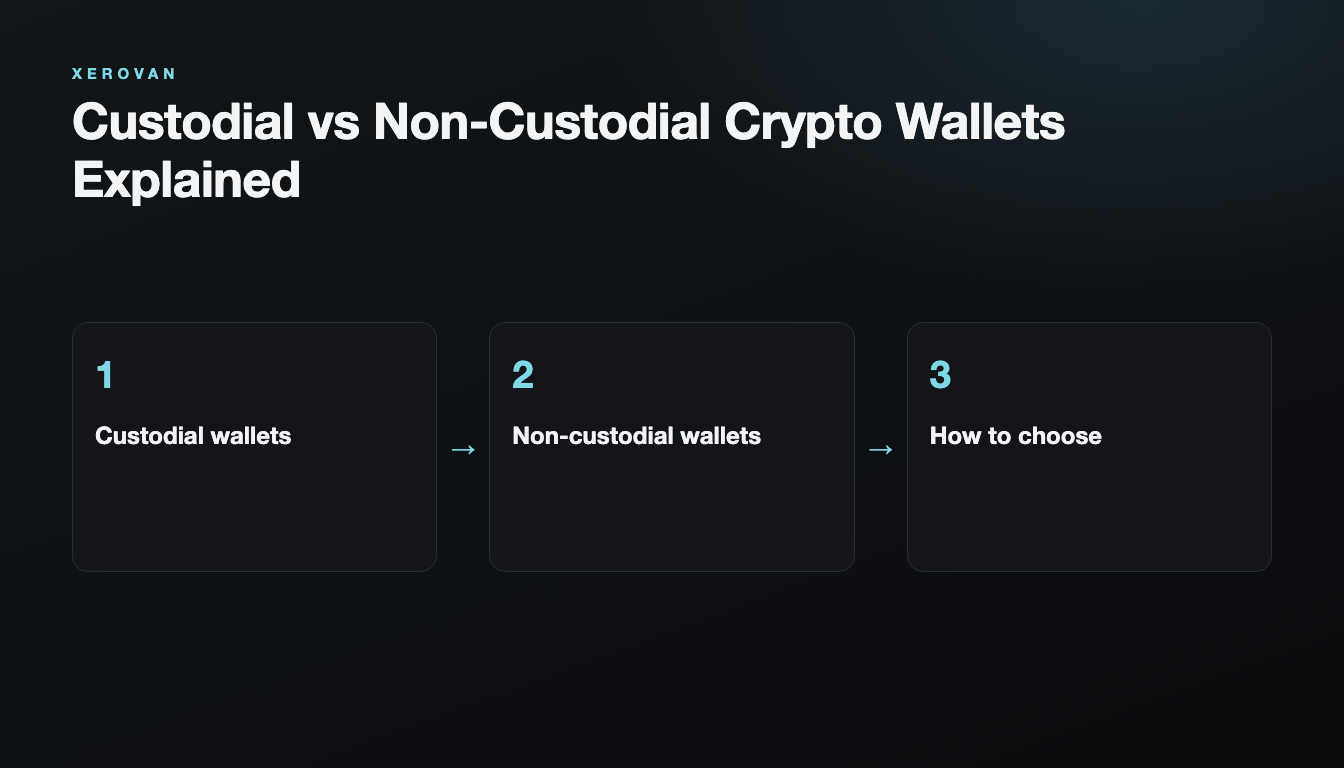
The first thing to check when choosing a crypto wallet is who controls the private key. That decides how recovery works and who is responsible for security.
Custodial wallets
A service provider, such as an exchange, manages the keys and the assets. Account recovery is relatively easy, but you can be affected by withdrawal limits or service outages.
Non-custodial wallets
You control the signing authority yourself. You get more control over your assets, but if you lose your recovery method or approve a malicious transaction, it is hard to undo.
How to choose
- Can you keep your recovery method safe yourself?
- Does it fit the size of your holdings and how often you transact?
- Do you need to manage several chains and external wallets together?
- For company funds, can approval rights be split?
The Xerovan wallet
Xerovan provides a non-custodial MPC multi-wallet. You can manage assets on multiple chains and external wallets in one place and connect them to Visa card payments. For a detailed comparison, see Custodial vs Non-Custodial Crypto Cards.
For a side-by-side table of the two payment models, see Custodial vs Wallet-Direct Crypto Cards.
Note: This article is general information, not financial or legal advice. Xerovan is not a bank; card and payment services are provided by licensed partners. Availability and fees vary by country, and merchants and issuers decide whether to approve a payment. Digital assets involve risks, including price volatility, network disruptions and possible loss of funds.