USD Payments for Global Freelancers and Crypto Cards
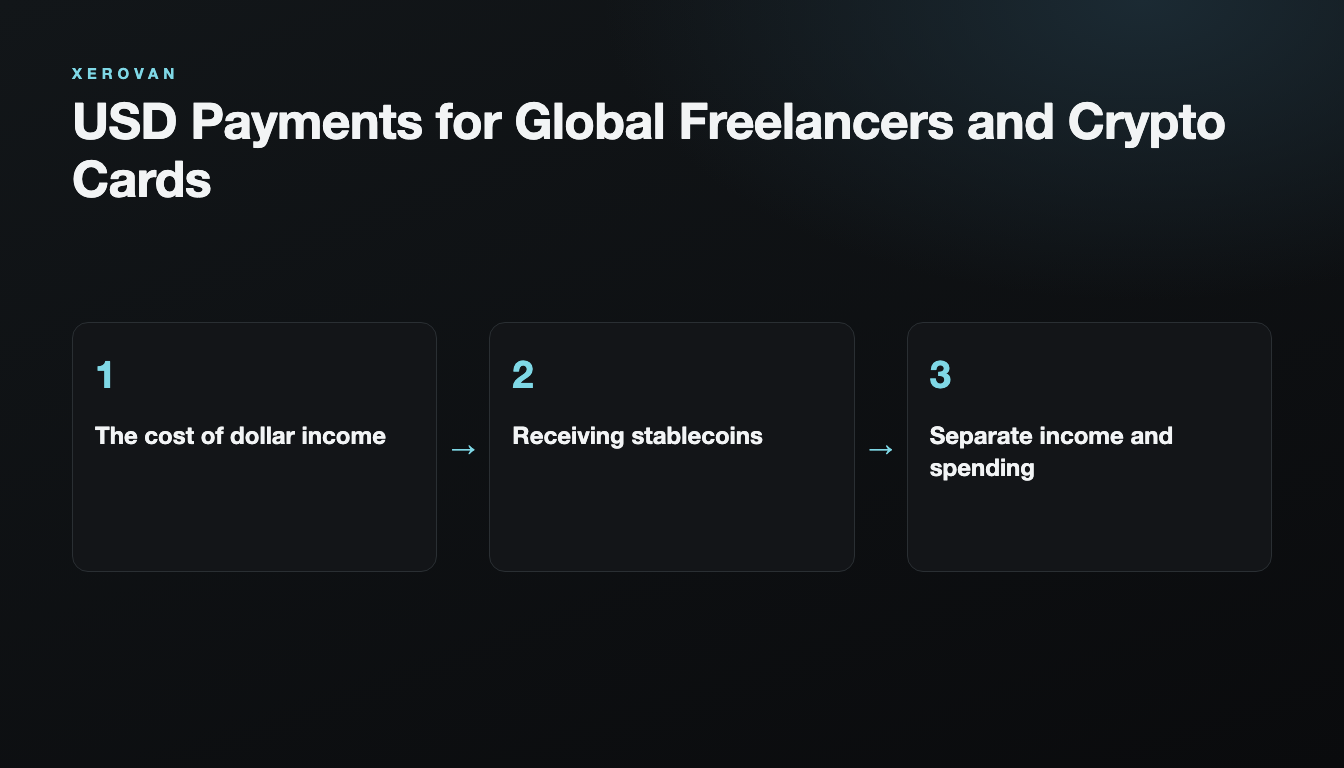
For a freelancer paid in dollars, real income is not the invoiced amount but what is left after fees and conversion.
The cost of dollar income
Platform fees, transfer fees and exchange-rate differences can each apply. Compare the final amount you receive for the same payment through each route.
Receiving stablecoins
- Agree on the network and the coin with your client first.
- Double-check the receiving address.
- Check local tax and foreign-exchange rules.
- Understand issuer risk and the possibility of price changes.
Separate income and spending
Putting business expenses on one card makes transactions easier to sort. Organizing invoices, receipts of payment and card spending together each month helps at tax time.
Managing it with Xerovan
In the Xerovan app you can manage wallets, swap supported assets and pay worldwide with a Visa card. Check tax treatment with a local professional.
To see how per-job crypto payouts work in practice, see Crypto Payouts for Freelancers.
Note: This article is general information, not financial or legal advice. Xerovan is not a bank; card and payment services are provided by licensed partners. Availability and fees vary by country, and merchants and issuers decide whether to approve a payment. Digital assets involve risks, including price volatility, network disruptions and possible loss of funds.