Business Cards: Paying in USD vs Local Currency
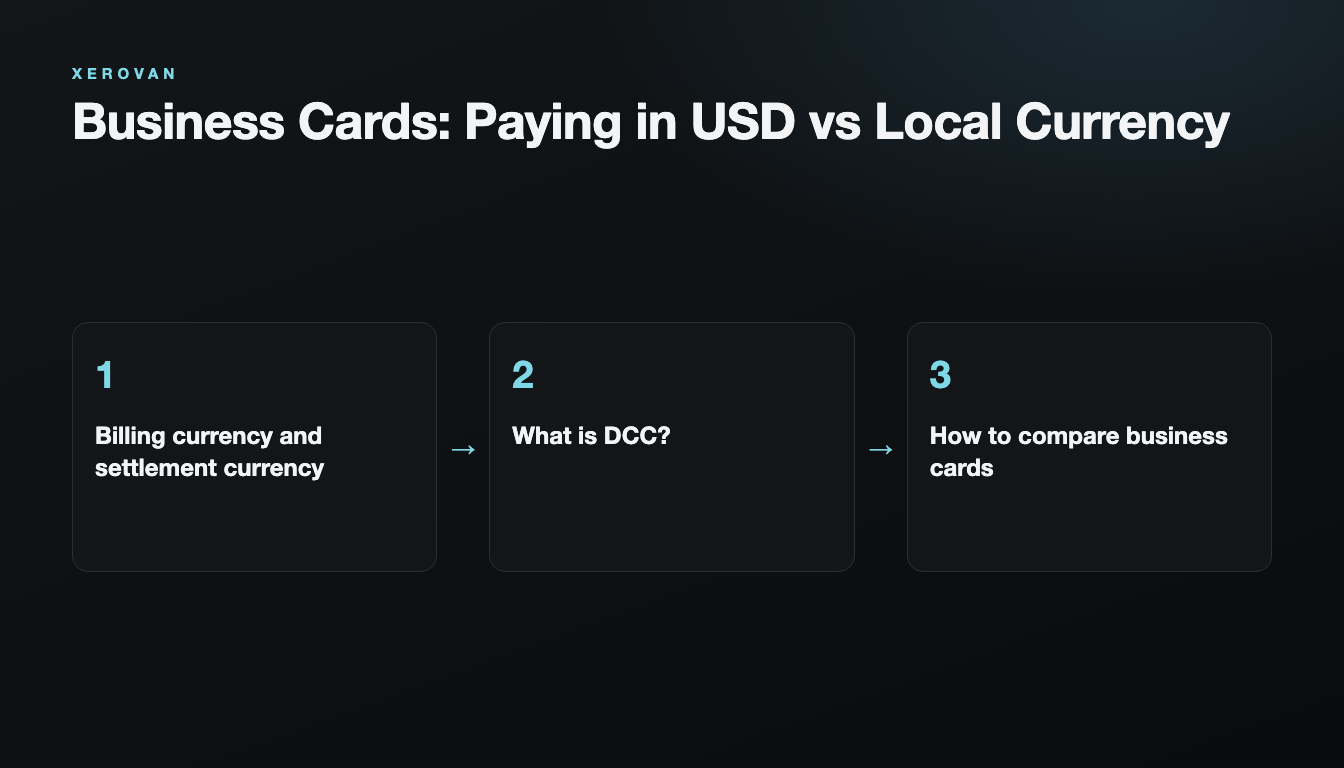
You have probably seen a checkout screen asking you to choose between the local currency and USD. That choice can change the exchange rate and fees you pay.
Billing currency and settlement currency
When the merchant’s currency differs from the card’s base currency, a currency conversion happens. A foreign transaction fee can be charged on top of the conversion.
What is DCC?
Dynamic Currency Conversion (DCC) is when a foreign merchant converts the charge into the cardholder’s home currency. You see the amount right away, but the rate can be unfavorable, so it is worth comparing both amounts.
How to compare business cards
- Use the same invoice as the baseline.
- Compare the final amount deducted.
- Record the foreign transaction fee and the exchange-rate margin separately.
- Set a policy for your highest-volume currencies first.
If you get many USD invoices, compare dollar-based payment methods as well. A USD card does not make every cost disappear, though. To work out the fees, see How to Calculate Crypto Card Foreign Transaction Fees.
Note: This article is general information, not financial or legal advice. Xerovan is not a bank; card and payment services are provided by licensed partners. Availability and fees vary by country, and merchants and issuers decide whether to approve a payment. Digital assets involve risks, including price volatility, network disruptions and possible loss of funds.